Extreme Heat Impacts National Celebrations
An intense heat wave has significantly disrupted Independence Day events across the United States, coinciding with the nation’s 250th anniversary of independence. As temperatures soared, the National Weather Service issued heat alerts affecting over 185 million people, suggesting the possibility of breaking daily, monthly, and even all-time temperature records.
Across the country, temperatures reached unprecedented highs, with heat indices predicted to soar as high as 115 degrees Fahrenheit (46 degrees Celsius) in certain regions. The relentless heat forced the alteration or cancellation of several Fourth of July festivities, including parades, concerts, and fireworks displays.
Event Cancellations and Public Safety Warnings
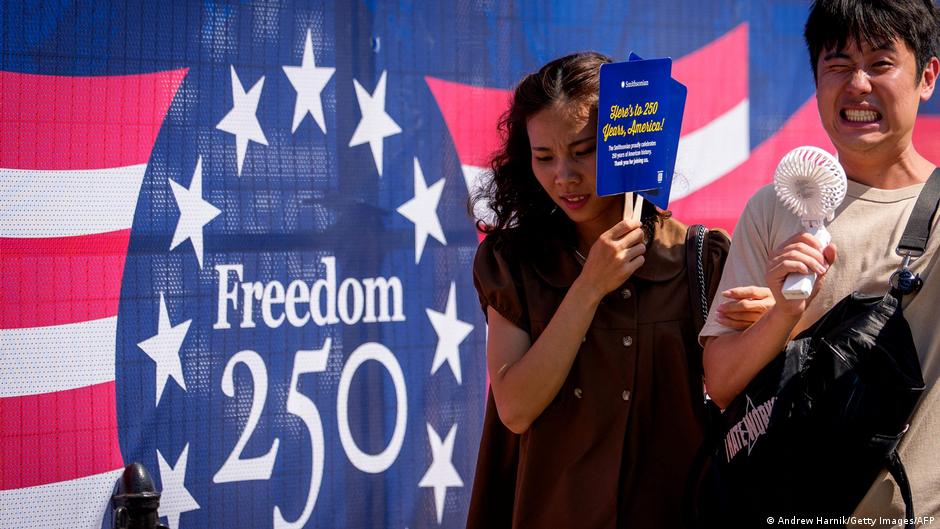
In Washington, DC, the Great American State Fair, a key event organized as part of President Donald Trump’s flagship celebrations for the anniversary, faced a temporary closure due to the extreme temperatures. The fair, orchestrated by the Freedom 250 foundation chaired by Trump, was put on hold when temperatures hit 101 degrees Fahrenheit.
Similarly, in Philadelphia, the Salute to Independence parade was called off after temperatures reached a sweltering 103 degrees Fahrenheit, matching a historical high last recorded in 1901. Authorities across the nation have cautioned that the heat wave could pose serious health risks, urging the public to stay hydrated and vigilant for symptoms of heat-related illnesses.
Political Undertones in Independence Day Speech
Amid these challenges, President Trump delivered a speech at Mount Rushmore, warning of the perceived threat of communism to American liberty. He likened this threat to monumental historical events, such as World War I and II, Pearl Harbor, and the attacks on September 11. Trump’s rhetoric centered on a resurgence of communist ideologies, which he claimed are embraced by some newcomers to the United States.
This speech followed a series of progressive victories in Democratic primaries across several states, including New York, Colorado, and others. Trump's comments, delivered at a location symbolic of American presidential legacy, deviated from the more traditionally unifying address expected on Independence Day, reminiscent of former Republican presidents like Gerald Ford and Ronald Reagan.
As the nation contends with both the extreme weather and the political climate, the usual celebratory nature of the Fourth of July is marked by a sense of urgency and division, reflecting broader national challenges.
Source: Original Article