
Rising Concerns Over Eucalyptus and Wildfires
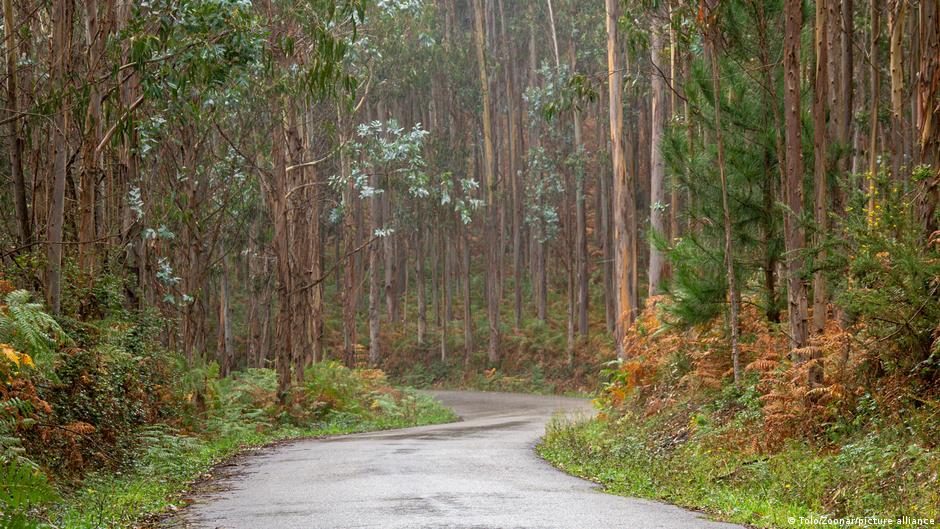
As Europe faces yet another summer marked by extreme temperatures and subsequent wildfire warnings, the focus has turned to a tree imported from Australia: eucalyptus. This tree, despite its inviting appearance, poses a significant fire risk, especially during drought periods.
The Camino de Santiago pilgrim route in Galicia attracts over 400,000 hikers annually, but the forests along this route have seen a transformation over time. Instead of the native oak and chestnut, the landscape is now heavily dominated by eucalyptus, a shift that is not exclusive to Galicia.
Eucalyptus Plantations Across the Globe
The adaptability and rapid growth of eucalyptus have made it highly valued by the pulp and timber industries. As a result, extensive monocultures have been established in regions including Brazil, Chile, California, India, and South Africa. Eucalyptus plantations now cover 22 million hectares across more than 90 countries, forming a crucial part of rural economies.
However, these plantations are not without their drawbacks. The trees are considered highly flammable, posing substantial wildfire risks. This summer, Europe has already experienced early heatwaves, exacerbating the potential for fires, particularly on the Iberian Peninsula, where a record-breaking amount of land was scorched last year.
The Fire-Intensifying Nature of Eucalyptus
Researchers have noted that while eucalyptus trees are not responsible for starting fires, they can greatly intensify them. According to Tim Curran from Lincoln University, eucalyptus forests are among the most flammable globally, and their introduction can significantly alter local fire regimes, increasing both the intensity and frequency of fires.
The oils in the leaves and the bark can easily catch fire, turning into embers that may travel vast distances, igniting secondary fires, as seen during Australia’s catastrophic 2009 Black Saturday fires.
Expansion and Challenges in Galicia
In Galicia, eucalyptus plantations have expanded far beyond their intended limits. While native species like oak and chestnut take decades to mature, eucalyptus can do so in a mere 15 years, allowing them to quickly regenerate after fires and outcompete native species.
The plantations date back to the 1970s, with a significant increase in the 1990s. A forestry plan by the regional government in 1992 projected eucalyptus would cover 250,000 hectares by 2030, but it has already reached double that amount.
Despite a moratorium on new plantations, enforcement is uneven, and illegal planting continues. The economic benefits are significant, with the industry generating substantial revenues, but mismanagement and land abandonment exacerbate the spread.
Managing the Eucalyptus Legacy
Local leaders and communities are pushing for change. Joam Evans Pim, a community leader, recounts how wildfires have reshaped the landscape in his area, motivating efforts to remove eucalyptus and restore native species through initiatives like the De-Eucalyptus Brigades.
Efforts are underway to replace eucalyptus with native vegetation to create natural firebreaks and promote ecosystems that are resilient to fire and climate change.
Balancing Economic and Environmental Concerns
The situation in Portugal, where devastating fires claimed lives, serves as a stark warning of the dangers posed by unmanaged land. Scientists and activists emphasize the need for balance between the economic gains from eucalyptus and the escalating wildfire risks.
Experts like Joaquim Sande Silva advocate for stricter regulations regarding eucalyptus plantations, ensuring they do not replace critical ecosystems.
Source: Original Article